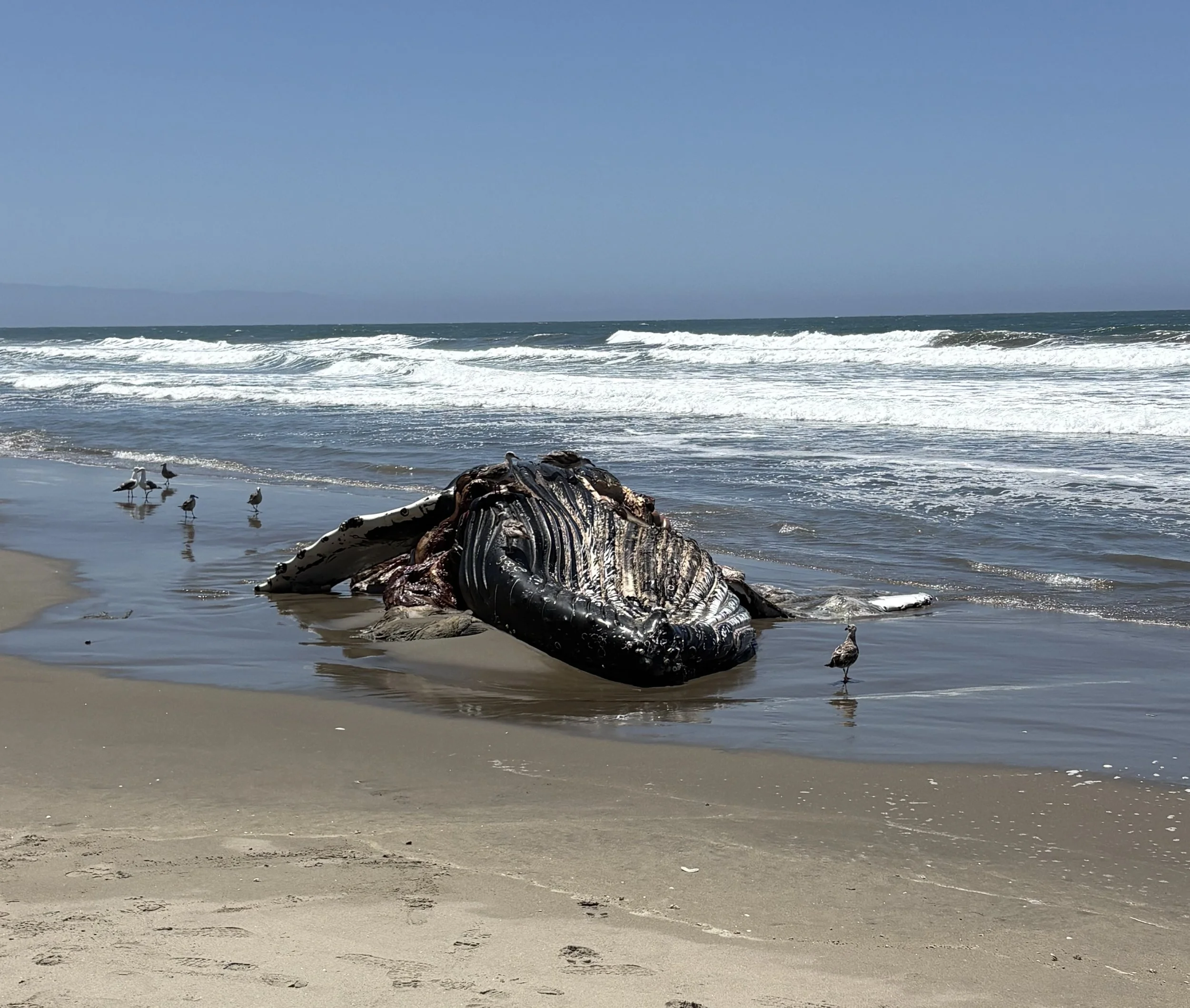
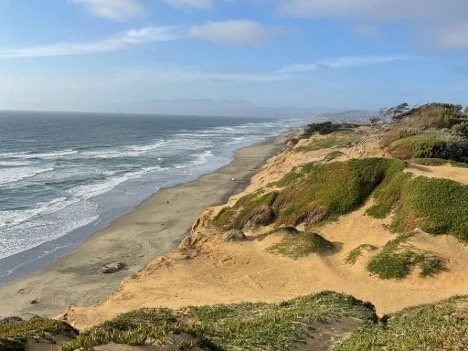
Fort Funston, overlooking the Marin headlands. Image credit: Keiki Sunderland
California’s Coastal Management Program Under Review
The year was 1913, and Californians needed water. Among the ashes of the 1906 San Francisco earthquake and fire, the wounded city realized it could no longer use its modest groundwater stores to protect itself from blazes. The Golden City had outgrown its hydraulic infrastructure.
Steered by desperate times and wind-caught dreams of expansion, local and state officials sought a new source of freshwater. One source in particular stuck out, a glacial valley through which the Tuolumne River flowed, a place so serene it was protected under federal law. The city argued that tourists could see the neighboring Yosemite valley instead, that the shape of the land was perfect for a dam. Engineers and surveyors offered Lake Tahoe, the Mokelumne River, and Lake Eleanor, but no other body of water could sway the officials’ conviction for such a cheap, infallible source. San Francisco had to have Hetch Hetchy.
After five delayed congressional hearings, nationwide resistance, and several administration changes, the Secretary of the Interior granted San Francisco the right to dam the pristine, two million year old valley. The passing of the Raker Act marked a turning point in American history, when for the first time a national audience scrutinized the utilitarian pursuit of economic progress at the cost of natural resources. Aftershocks from the decision reverberated into future policy, inducing the creation of the National Parks Service and foreshadowing lasting debate between state and federal entities regarding the management of natural resources in service of Americans’ interests.
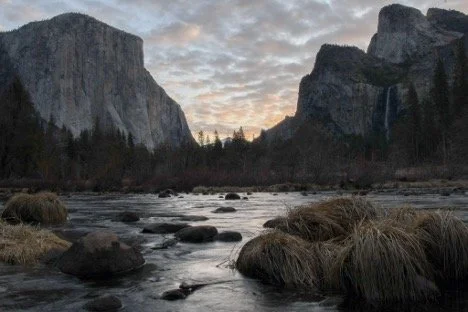
Historic Yosemite valley. Image credit: Dylan Chin
The Golden Coast
It wouldn’t be a stretch of the imagination to see visions of Hetch Hetchy valley in California’s tidal coastline. Sandstone and shale cliffs plunge into clean seawater and dense kelp forests, breaking in between stretches of beaches for a total of around 3,400 miles. Beyond the water’s edge, the homesteads of about 27 million Californian residents share space with diverse prairies, scrub ecosystems, and temperate rainforests fueled by the State’s misty marine layer.
The California coast is also among the most productive economic regions in the nation; mild inland weather, healthy soil, and productive seas support fisheries, agriculture, shipping, and tourism industries, generating over 60 billion dollars for the state’s economy every year. Coastal wetlands also offer organic protection from erosion and storm surges, saving cities from disaster relief costs and reparations.
The Golden State’s coastline represents a collaborative effort by federal and local authorities to re-write the Hetch Hetchy story by marrying economic growth to environmental protection. During an August 5th installment of the California Natural Resources Agency’s Secretary Speaker Series, state officials argued that retaining the integrity of natural resources directly correlates to California’s economic success. “It’s not about one over the other,” said Dee Dee Myers, Director of the Governor’s Office of Business and Economic Development. “It’s about preserving the natural assets that are going to fuel tourism and recreation and commercial fishing and commerce that countless businesses count on.”
Officiating this match made in Californian coastal heaven is the Coastal Zone Management Act (CZMA). This piece of federal literature operates on the principle that locals know best, allowing coast-bordering states to serve as primary authorities on matters relevant to their seaside (and, in the case of the great lakes, lakeside) regions. Under the act, states manage development projects, public access regulations, and environmental preservation initiatives in a manner that best represents the interests of their citizens’ values.
The Act’s federal consistency module gives states a position from which to advise federal coastal land use practices, even in Marine Protected Areas and military bases. Built on the recognition that state and federal priorities may differ, the act does not permit states to directly regulate federal activity, but rather weigh in on proposals and offer site-specific recommendations in search of a healthy compromise.
This concept was a central focus of this month’s Secretary Speaker Series. “The Federal Government is not allowed to do something that is inconsistent with that state’s policies for the coast,” Said Dereck Brockbank, Coastal States Organization Executive Director. “It’s not just about environmental protection, too. It’s about the state having the opportunity to figure out how to best support their economy in the ways that they want.”
Federal-state collaboration regarding coastal site management assumes and requires a climate of mutual well-meaning to operate efficiently; states must not directly impede national priorities, while the federal government must make some effort to amend its plans in service of the interests of the state’s people.
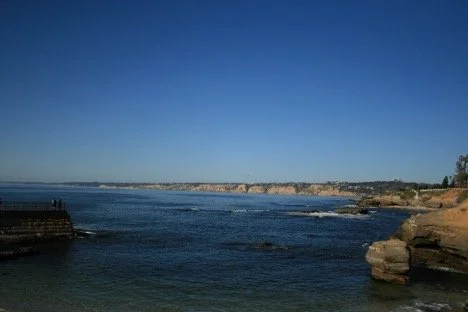
La Jolla Cove, San Diego County. Image credit: Keiki Sunderland
Regulation Past and Present
In California, enforcement of the CZMA falls upon a suite of state agencies. The California Coastal Commission, the San Francisco Bay Conservation and Development Commission, and the California Coastal Conservancy cooperatively oversee different segments of the California Coastal Management Program. The California Coastal Conservancy organizes funding for land restoration projects, while the San Francisco Bay Conservation and Development Commission handles local regulatory matters. The California Coastal Commission oversees permitting, regulation, and federal consistency for the rest of the state.
The California Coastal Commission was created in 1976 by a citizen vote against the imaginations of industrialists and developers. During the 1960’s, power plants, freeways, and gated communities à la Marincello threatened to scrub away at native coastal habitats and reduce publicly accessible coastline to patches, prompting public protest and outcry. The resulting legislation, known as the California Coastal Act, set a precedent for the strict construction limits and public access protections that have defined the objectives of the California Coastal Commission for the last 50 years. The Commission, along with the other organizations in the Coastal Management Program, was approved to spearhead the CZMA for the state in 1978.
While much of coastal Southern California had already urbanized by 1976, the California Coastal Commission has played a large role in keeping Northern and Central California’s shores vegetated and open-access. Notable examples of the Commission’s work include compromising with the navy to modify training sonar regiments to reduce disturbance to marine mammals, stopping the construction of a toll highway through San Onofre State beach, and objecting to proposals from oil companies like Exxon and Chevron to drill in the Santa Barbara Channel. The Coastal Commission also employs local biologists to identify environmentally sensitive habitats to more closely regulate their protection.
Regulating coastal development prevents ecosystem degradation along several avenues. Without proper monitoring and consultation, construction uproots vegetation, allowing suffocating amounts of silt into waterways shared with California’s recovering populations of salmon and trout. Urbanizing swathes of coastal land clogs up movement patterns of mountain lions, bobcats, and ungulates, while privatizing beaches and coves can leave seal and sea lion rookeries and breeding grounds unprotected from beach traffic.
In over 50 years of the California Coastal Management Program’s existence, the population demographics of the state have changed significantly. New state demographics implore a need for the program’s regulatory agencies to continuously review their priorities to better suit the identities of current citizens. Survey results from the Public Policy Institute of California demonstrate a general pattern of agreement with the program’s regulatory policies and initiatives, with 8 in 10 Californians regarding the California Coastal Commission positively as of July 2026.
Despite receiving continued, bipartisan public support, the California Coastal Management Program is not unanimously favored. Citizens have raised concerns with the Coastal Commission’s strict permitting requirements, which could impede the development of affordable housing in an increasingly populated state. The program has also been accused of basing its regulatory decisions on bias, notably by Elon Musk after an objection to increasing SpaceX rocket launches correlated with some political comments made by California Coastal commissioners against the company’s CEO.
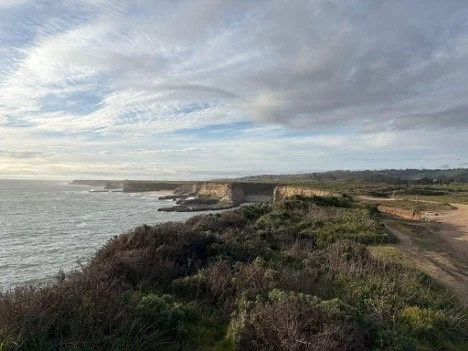
Wilder Ranch State Park. Image credit: Keiki Sunderland
Contention in the Capitol
California’s environmentally focused coastal management strategy doesn’t always align with the interests of the federal government. In a letter to National Economic Council director Kevin Hassett, Secretary of Commerce Howard Lutnick cited the California Coastal Commission’s rejections of federal proposals for spaceport construction, offshore oil drilling, and pipeline maintenance as evidence of the state’s negligence of urgent national priorities.
This criticism follows a review of state actions in compliance with “Enabling Competition in the Commercial Space Industry” Executive Order 14335, in which California’s actions against Air Force spaceport development stuck out when compared to Texas, Florida, and Virginia. Lutnick writes that the state’s resistance to increasing spacecraft launch frequencies Vandenberg Space Force base aligns with “California’s long record of obstructing technological innovation, economic development, and related Federal efforts in the name of environmental extremism.”
Lutnick’s impression of “environmental extremism” likely draws on recent disagreements between state authorities and the oil and gas industry. The California Coastal Commission voted this year against the Bureau of Ocean Energy Management’s planned use of hydraulic fracturing at 16 offshore oil sites in the Santa Barbara Channel. In 2025, the Commission sued Houston-based oil company Sable Offshore for 18$ million. The company had initiated repairing an offline oil pipeline known for causing the 2015 Refugio oil spill in Huntington beach without acquiring necessary permits beforehand.
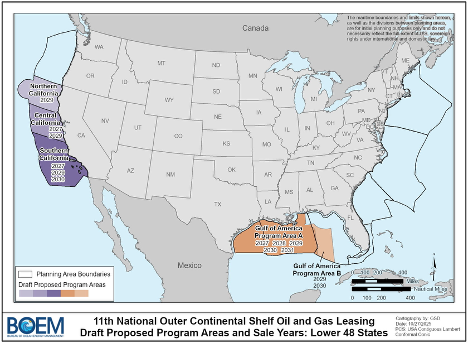
Proposed oil and gas leasing zones under the 11th National Outer Continental Shelf Oil and Gas Leasing Program. Image credit: United States Bureau of Ocean Energy Management.
The California Coastal Commission responded to Lutnick’s accusations with evidence of its own. “Over our 48-year history, the Coastal Commission has reviewed more than 3,700 federal actions,” said Kate Huckelbridge, Executive Director of the California Coastal Commission. “In over 96% of those cases, we have either negotiated improvements or approved a project as submitted.” Huckelbridge also spoke on the relationship between the commission and the federal government’s interests at the Secretary Speaker Series. “The Coastal Commission has worked with Vandenberg…over many, many years. Over 100 actions… and we have concurred or agreed and found a path with Vandenberg in all but two of the cases we’ve reviewed.”
A Coastline Under Review
On May 20th, the Department of Commerce directed the National Oceanic and Atmospheric Administration (NOAA) to open a formal review of California’s Coastal Management Program. The program and its agencies receive regular reviews by NOAA on a 5-10 year cycle, with the most current 2025 review left positive, but incomplete, after the recent government administration change. California’s program has received positive reviews compliant with the CZMA for its entire history under the act.
NOAA held meetings in-person and virtually to offer members of the public and stakeholders opportunities to comment. The administration also accepted public comments via email through August 22nd. After collecting this feedback, the federal government will produce a verdict on the status of the program, which may result in removal of funding resources or, as an extreme, removal of federal partnership through the CZMA. The federal government is obligated to provide California with pathways to remedy grievances and improve their program in accordance with the CZMA. California’s Coastal Management Program would also be afforded an opportunity to defend itself and explain how its policies align with the CZMA.
State officials are concerned with the precedent this review sets. “This is not about political difference, but about good public process,” says Wade Crowfoot, Secretary for Natural Resources at the California Natural Resources Agency. Derek Brockbank also weighed in on the long term consequences of the review. “There’s a real concern that if it becomes acceptable to re-open a review without the appropriate steps… any state could be concerned having a federal review of their program at any time,” he said.
Brockbank also noted that, should the review negatively effect funding resources for the state, administration changes may impact which states’ coastal programs fall under federal threat. “There is a concern that, if this precedent is established under a different administration… that could adversely impact how a Texas or a South Carolina might want to implement their programs in a way
that feels right for that state and upholds the values of the people of that state.”
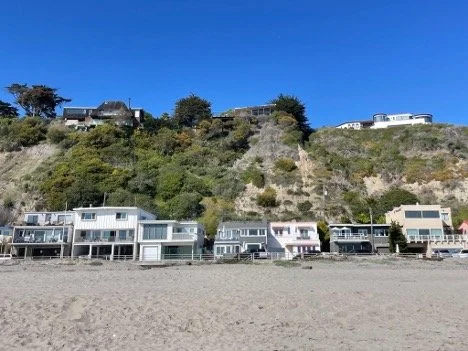
Homes at Rio Del Mar State Beach. Image credit: Keiki Sunderland
Common Ground
Federal consistency serves as a connecting point between state and national interests. It allows states some control of their coastlines and an opportunity to voice local priorities and identities. California’s economy has profited from its ability to work with the federal government, from Hetch Hetchy to keeping its coastline pristine, accessible, and productive. The future of California’s beaches, cliffs, and wetlands relies on its continued ability to advocate for its current local priorities in collaboration with – rather than against – the federal government.
The 12 voting members of the California Coastal Commission, who determine the outcomes of local development and federal consistency proposals, are appointed by the state’s Governor, Senate Rules Committee, and Speaker for the Assembly. Alongside appointing commissioners, these officials are able to apply legal challenges to federal proposals, rally support for coastal protections, and refuse exemptions proposed to commission policies. Public voters will determine California’s next governor on November 3rd; this election offers a critical opportunity for voters to advocate for coastal protections and stand behind California’s say in its ecological management amidst the federal review of its Coastal Commission.
Transcripts of stakeholder meetings can be requested from NOAA via email at: czma.california-evalution@noaa.gov
Resources“California Calls for Communities to Make Their Voices Heard as Federal Administration Threatens State’s Coast.” California Natural Resources Agency, 7 July 2026, www.resources.ca.gov/Newsroom/Page-Content/News-List/California-calls-for-communities
“Coastal Zone Management Act.” The National Coastal Zone Management Program, National Oceanic and Atmospheric Administration Office For Coastal Management, www.coast.noaa.gov/czm/act/
“Commerce Department Initiates Review of California Coastal Management Program under Coastal Zone Management Act | U.S. Department of Commerce.” U.S. Department of Commerce, 20 May 2026, www.commerce.gov/news/press-releases/2026/05/commerce-department-initiates-review-california-coastal-management
Crowfoot, Wade. Your Coast, Your Economy, Your Voice - Defending California’s Coast from Federal Threats. Secretary Speaker Series, California Natural Resources Agency, 5 Aug. 2026, https://www.youtube.com/watch?v=6yviE1Fn8PM&t=1762s
Diamond, Jordan, et al. “The Past, Present, and Future of California’s Coastal Act.” The Past, Present, and Future of California’s Coastal Act - Overcoming Division to Comprehensively Manage the Coast, UC Davis School of Law, Aug. 2017, law.ucdavis.edu/sites/g/files/dgvnsk10866/files/media/documents/Coastal-Act-Whitepaper-FINAL-2017.8.18.pdf
“Environmental Impact Statement on Platform Gilda Well Stimulation Treatment.” Bureau of Ocean Energy Management, 5 May 2026, www.boem.gov/regions/pacific-ocs-region/environmental-impact-statement-platform-gilda-well-stimulation-treatment
Hernandez, Salvador. “California Officials Reject More SpaceX Rocket Launches, with Some Citing Musk’s X Posts.” Los Angeles Times, Los Angeles Times, 11 Oct. 2024, www.latimes.com/california/story/2024-10-11/la-me-spacex-coastal-commission
“Hetch Hetchy Environmental Debates.” National Archives and Records Administration, National Archives and Records Administration, 25 Aug. 2017, www.archives.gov/legislative/features/hetch-hetchy
“The Hetch Hetchy Timeline.” National Parks Service, U.S. Department of the Interior, 18 July 2024, www.nps.gov/jomu/learn/historyculture/the-hetch-hetchy-timeline.htm
Lester. “THE CALIFORNIA COASTAL MANAGEMENT PROGRAM A Model for Coastal Conservation and Management in Chile? .” UC Santa Barbara Ocean and Coastal Policy Center, UC Santa Barbara, Dec. 2020, ocpc.msi.ucsb.edu/sites/default/files/Lester%2C%20CCMP%20and%20Chile%20Brochure%20English%2012.2020.pdf
“Marin Headlands.” The Nature Conservancy, www.nature.org/en-us/get-involved/how-to-help/places-we-protect/the-nature-conservancy-in-california-1972-marin-headlands/
“Notice of Public Meeting on the Evaluation of the California Coastal Management Program.” California Coastal Commission, myemail.constantcontact.com/Notice-of-Public-Meeting-on-the-Evaluation-of-the-California-Coastal-Management-Program.html?soid=1102778617361&aid=tlIuFK6cLA4
“PPIC Statewide Survey: Californians and the Environment.” Public Policy Institute of California, 11 Aug. 2026, www.ppic.org/publication/ppic-statewide-survey-californians-and-the-environment-july-2026/
Sackett, Mandy. “California Coastal Commission Fights Back against Oil Pipeline Violations.” The Surfrider Foundation, 1 May 2025, www.surfrider.org/news/california-coastal-commission-fights-back-against-oil-pipeline-violations-0
State of California - Ca. Coastal Commission. “Federal Consistency Program.” California Coastal Commission, www.coastal.ca.gov/fedcd/fedcndx.html